Porter Ranch Wildfire Preparedness: 2026 Homeowner Guide
Porter Ranch wildfire preparedness comes down to four obligations in 2026. Most of the neighborhood sits inside a Very High Fire Hazard Severity Zone, which means annual brush clearance by May 1, defensible space compliance around your home, AB 38 disclosure documentation when you sell, and navigating an insurance market where the California FAIR Plan has become the default. This guide breaks down exactly what each one requires, with current rules and sourced numbers.
TL;DR — the quick version
- Porter Ranch is classified Very High Fire Hazard Severity Zone — verify your exact parcel on the CAL FIRE FHSZ viewer.
- Brush clearance: clear vegetation within 200 feet of structures; grass and brush cut to 3 inches; deadline May 1 each year.
- Defensible space has three zones: Zone 0 (0–5 ft, no combustibles), Zone 1 (5–30 ft, lean and green), Zone 2 (30–100 ft, reduced fuel).
- Selling a home? AB 38 requires defensible-space compliance documentation before close of escrow.
- Insurance: the FAIR Plan plus a private DIC wrap is now the standard; the FAIR Plan requested a 36% rate increase for 2026.
- Failing the LAFD inspection costs $31 per parcel (plus a 200% penalty if unpaid). Pass by May 1 and you owe nothing.
Is Porter Ranch in a fire zone?
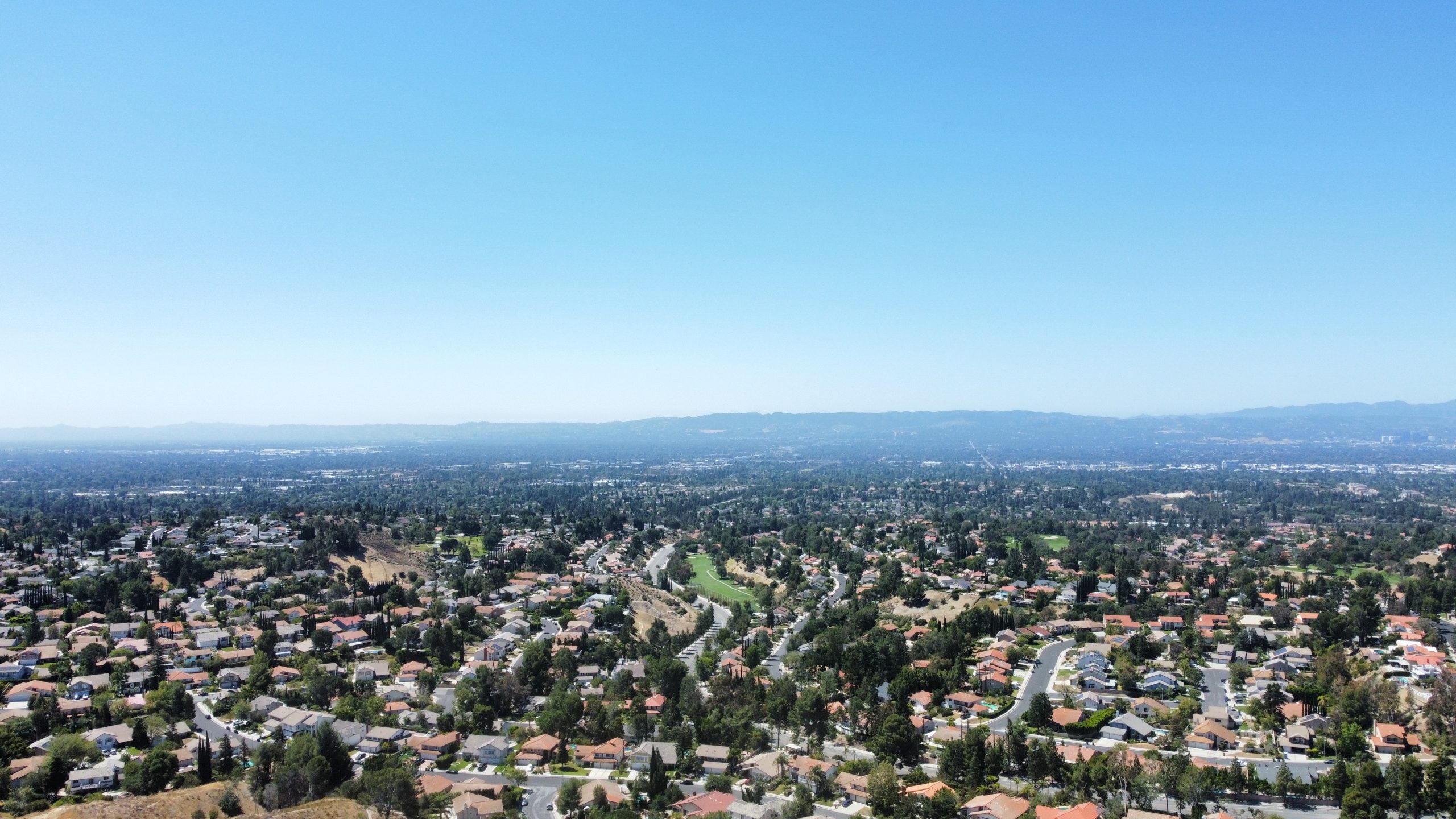
Yes. The Los Angeles Fire Department classifies most of Porter Ranch within the Very High Fire Hazard Severity Zone (VHFHSZ), a CAL FIRE designation that triggers state defensible-space requirements and city brush-clearance enforcement. CAL FIRE updated its Fire Hazard Severity Zone maps for Los Angeles County in early 2025, expanding the number of affected parcels. Some properties previously classified High are now Very High.
Do not assume — verify your specific parcel on the CAL FIRE Fire Hazard Severity Zone viewer before making any decisions about clearance, insurance, or a sale.
What are the brush clearance requirements?
The core rule: every Porter Ranch property owner must clear hazardous vegetation within 200 feet of any structure on the property, year-round. The Los Angeles Fire Department inspects parcels in fire hazard zones each spring, beginning May 1.
| Requirement | Standard |
|---|---|
| Grass | Cut to 3 inches in height |
| Native brush | Reduced to 3 inches (spaced native shrubs exempt if 18 ft apart, trimmed to 1/3 height, dead material removed) |
| Trees over 18 ft | Lower branches trimmed so no foliage within 6 ft of the ground; dead material removed |
| Trees under 18 ft | Lower branches removed to 1/3 of tree height |
| Chimney clearance | No foliage within 10 ft of any chimney outlet |
| Roof surface | Free of accumulated leaves, needles, and combustible debris |
| Tree-to-roof | 5 ft vertical clearance from roof to overhanging branches |
The 2026 inspection fee is $31 per parcel, assessed only if your property fails the initial inspection. Pass by May 1 and there is no fee. If a fee is assessed and goes unpaid, LAFD adds a 200% penalty. Most Porter Ranch homeowners hire a licensed brush-clearance contractor before May 1 — the queue gets long in late spring.
What are the three defensible space zones?
California law divides the area around your home into three concentric zones, each with different rules. Porter Ranch homes in the VHFHSZ must comply with all three.
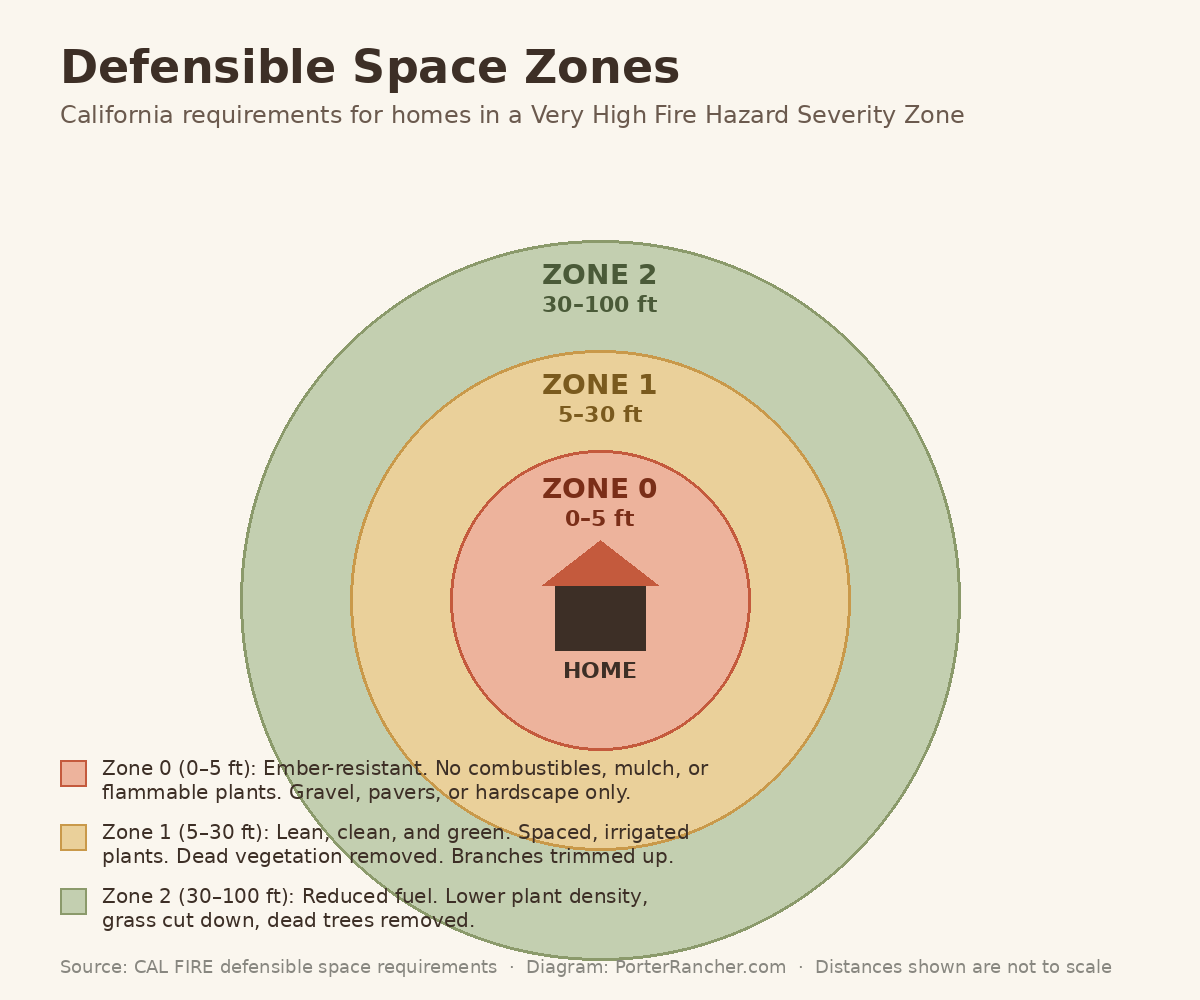
Zone 0 — ember-resistant zone (0–5 feet)
The five feet closest to any structure. The most critical zone. No combustible materials, no mulch, no woodpiles, no flammable plants. Landscaping is limited to gravel, pavers, hardscape, or vetted fire-resistant ground cover. California’s Board of Forestry continued refining Zone 0 rules through 2025, so review the current requirements if your landscaping touches the foundation.
Zone 1 — lean, clean, and green (5–30 feet)
Healthy, irrigated plants allowed but spaced so fire cannot carry through them. Dead vegetation removed, tree branches trimmed up, and wood fences attaching to the house made of non-combustible material for at least the first five feet.
Zone 2 — reduced fuel (30–100 feet)
Vegetation permitted at lower density. Tall grass cut down, dead and dying trees removed, and spacing increased between groups of plants so fire cannot run continuously toward the home.
What home hardening reduces fire risk most?
Home hardening targets the building itself — the structures that decide whether an ember lands harmlessly or starts a fire. Research consistently finds that most homes lost in wildfires are ignited by airborne embers rather than direct flame, which is why these upgrades matter as much as vegetation clearance. Priorities, in the order most contractors recommend:
- Ember-resistant vents. Attic and crawl-space vents are the most common ember entry point. 1/8-inch mesh or heat-activated closing vents. Highest-ROI upgrade.
- Class A roof. Composite shingle, metal, or tile. Most Porter Ranch homes already have this — confirm yours.
- Enclosed eaves and soffits with non-combustible materials.
- Dual-pane tempered windows. They survive radiant heat that single-pane breaks under. Older PR tracts may still have single-pane.
- Non-combustible decking, or removal of combustible deck material within 5 feet of the structure.
- Stucco siding (which nearly all PR homes already have) — the vulnerability is wood trim or siding within 6 inches of the ground.
Under California laws effective January 1, 2026, insurers must offer documented discounts for specific hardening upgrades. Keep receipts, photos, and contractor invoices — you may need them to claim the discount at renewal.
How does AB 38 affect selling a Porter Ranch home?
If your home sits in a High or Very High Fire Hazard Severity Zone — most of Porter Ranch does — California Assembly Bill 38 (in effect since July 2021) requires the seller to provide the buyer with documentation of defensible-space compliance before close of escrow. In practice: obtain an AB 38 inspection from an independent third party before listing, fix any deficiencies, and include the documentation in your disclosure package. Some sellers complete it pre-listing; others negotiate the cost into escrow. Skipping it is not an option, and surprised buyers frequently renegotiate or walk at the inspection stage. Our Porter Ranch selling guide covers the full disclosure package.
What is happening with home insurance in 2026?
This is the hardest part of the picture. Several major California insurers — State Farm, Allstate, and Farmers among them — stopped writing new homeowner policies in high-risk areas in 2023 and 2024, and most have not returned. Existing Porter Ranch policyholders may face non-renewal at their policy anniversary.
The California FAIR Plan — the state-backed insurer of last resort — has become the de facto fire-coverage option in many Porter Ranch zip codes. The FAIR Plan covers fire and a narrow band of perils, not theft, water damage, or liability. To restore comprehensive coverage, homeowners pair it with a “difference in conditions” (DIC) wrap from a private carrier. This FAIR Plan + DIC structure is now the standard for Porter Ranch. Our full guide to Porter Ranch home insurance and the FAIR Plan walks through how to structure it.
Costs are rising. After the January 2025 Los Angeles wildfires, the FAIR Plan reported roughly $4 billion in losses and assessed insurers $1 billion to stay solvent — a cost insurers can partially pass to customers. The California Department of Insurance confirmed the FAIR Plan requested a 36% rate increase for 2026. Nine new state laws took effect January 1, 2026 that expand non-renewal protections, mandate insurance discounts for documented home hardening, speed up claim payouts, and reform the FAIR Plan’s finances.
What changed in 2025 you might have missed
Three developments in 2025 shifted the Porter Ranch fire-readiness picture more than any year since the 2019 Saddleridge Fire (which burned 8,799 acres, damaged or destroyed roughly 25 structures, caused one death, and forced more than 100,000 people from their homes across Sylmar, Porter Ranch, and Granada Hills).
First, CAL FIRE’s 2025 FHSZ map update reclassified parcels across Los Angeles County, adding properties to the Very High zone. A designation you assumed was settled may have changed. Second, the January 2025 Los Angeles wildfires fundamentally altered the FAIR Plan’s finances, prompting the insurer assessment and surcharges now appearing on renewals. Third, California continued tightening Zone 0 requirements through 2025. If you have not had a defensible-space review in the last 18 months, you have not been evaluated under the current rules.
The Porter Ranch pros you may need
Most homeowners working through wildfire preparedness engage one or more of these:
- Brush clearance contractors — annual clearance to LAFD standards. Book before May 1.
- AB 38 inspectors — certified to issue compliance documentation for a sale.
- Independent insurance brokers — shop both the FAIR Plan and the DIC wrap market.
- Home hardening contractors — vent retrofits, eave enclosure, and discount documentation.
Vetted Porter Ranch providers will be added here. If you have worked with one you would recommend, let us know.
Frequently asked questions
EDITOR NOTE — delete this line before publishing. Recreate the Q&A pairs below inside a Rank Math “FAQ” block so the FAQ schema generates automatically. The text is here so you can copy it directly into the block.
Is all of Porter Ranch in a Very High Fire Hazard Severity Zone?
Most of it is, but you should verify your specific parcel using the CAL FIRE FHSZ viewer. The 2025 map update expanded the affected area, so some homes that were not previously classified Very High now are.
What is the brush clearance deadline in Porter Ranch?
May 1 each year. The LAFD begins inspections May 1. If your parcel is compliant by then, you owe no fee. If not, you are billed $31 per parcel, with a 200% penalty added if unpaid.
How far do I have to clear brush around my house?
200 feet from any structure on the property. Within that area, grass and native brush must be cut to 3 inches, with specific exemptions for spaced native shrubs.
Will my home insurance be cancelled in Porter Ranch?
Existing policies generally cannot be cancelled mid-term, but non-renewal at your policy anniversary is the current concern. Several major carriers have stopped writing new policies in Porter Ranch zip codes. Most homeowners now use the FAIR Plan paired with a private DIC policy.
What is the California FAIR Plan?
It is the state-backed insurer of last resort for fire coverage. If a standard carrier will not insure your Porter Ranch home, the FAIR Plan likely will — but it only covers fire and a few other perils, so it is typically paired with a difference-in-conditions (DIC) policy for full coverage.
How we sourced this
Sources: CAL FIRE Fire Hazard Severity Zone maps (2025 update); Los Angeles Fire Department Brush Clearance Requirements and 2026 Owner Notification Mailer; California Board of Forestry defensible-space Zone 0 guidance (2025); California Department of Insurance releases on FAIR Plan reforms and the laws effective January 1, 2026; and reporting on the October 2019 Saddleridge Fire. Last reviewed May 2026. Corrections welcome at hello@porterrancher.com.
What to do next
If you are working through the insurance side, our companion guide on home insurance and the California FAIR Plan in Porter Ranch covers how local homeowners are structuring coverage. If you are buying or selling, our Porter Ranch buying guide and selling guide explain how AB 38 affects your transaction.